Currier and Ives:
The world of art is not one devoid of capitalism. Art shocks, it reaches audiences, and pulls heartstrings. You can make money off of emotions, and you can make a profit off of reactions. This is a game that Currier and Ives knew well. How to use violence, fear, and tragedy to their benefit. One of such mid-19th-century fears was that of addiction.
As the freshly situated United States moved into the 19th-Century, many households drank abhorrent amounts of alcohol. The first act of federal power was instituting a tax on spirits, resulting in the Whiskey Rebellion. As time continued, people and the economy saw its effects, in 1826, the American Temperance Society was formed, quickly gaining in numbers. Within six years, they had a million members. In the 40’s, a movement began called the “Washington Movement,” where men would come to temperance meetings and share their stories of being “reformed drunkards.”1 This was a time when many individuals had seen the effects of addiction, when Christian ideologies of abstinence and temperance permeated the country.
Currier and Ives was a renowned printmaking firm from 1834 to 1907. The Company was founded by Currier, who apprenticed at the first successful lithography company in Boston, and later partnered with Ives.2 They were marketed as “engravings for the people,” mass-produced and very affordable. Currier and Ives succeeded in their goal, with their prints being hung in many American homes during the time.3,4 As they grew, they hired artists to make drawings. Each had a specialty topic. Thomas Worth worked on the incredibly racist “Darktown Comics.” Thomas Nast made political cartoons (discussed in a separate case study- click here to read ).5 Their process was unique as the lithographs were not printed in color, but instead they hired women to color them. Sadly, the women did not have any artistic liberty or power. The coloring had to be based on a pre-painted model. Interested in learning more about their lithography practices? Click here
Currier and Ives, Public domain, via Wikimedia Commons
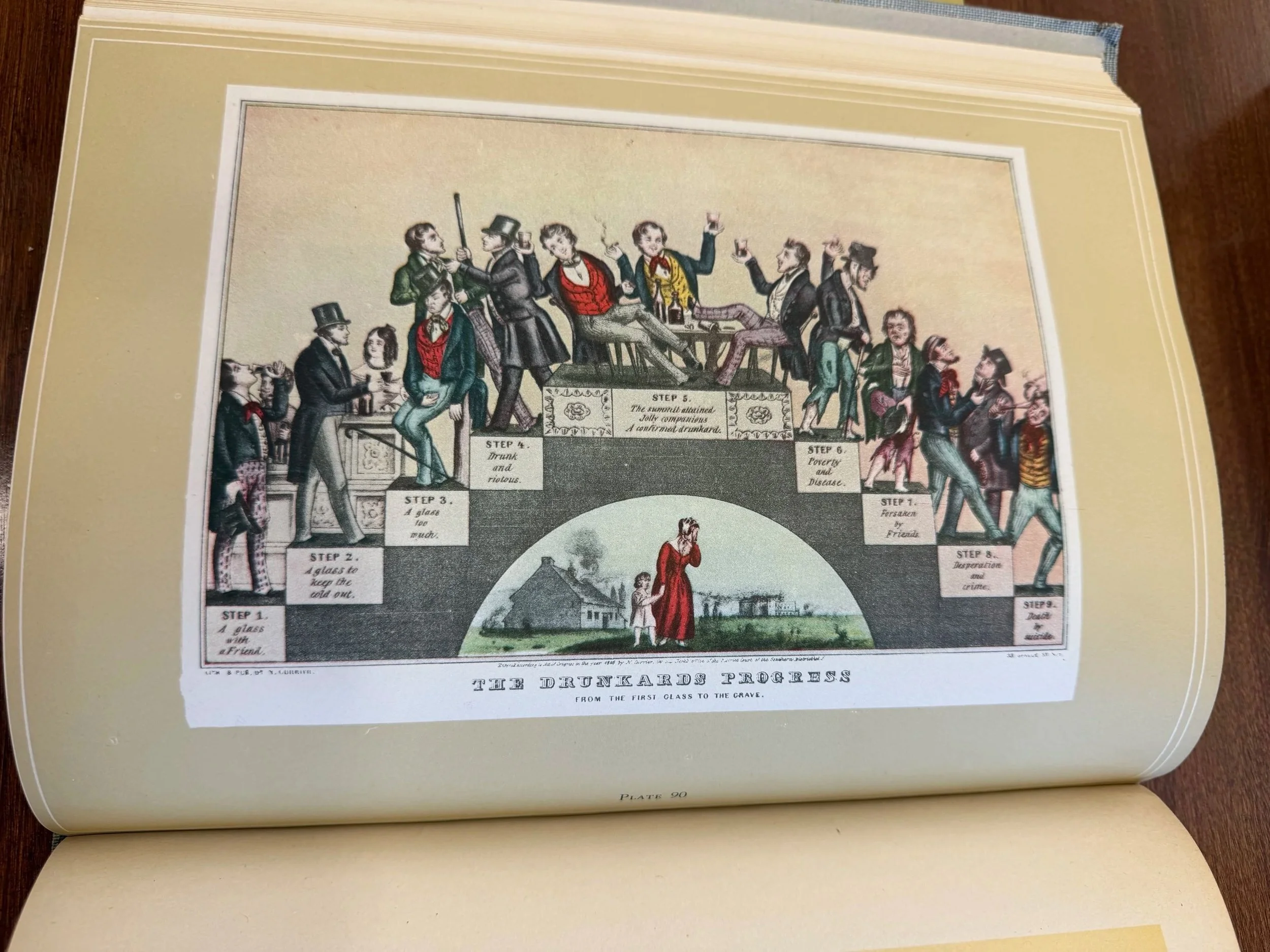
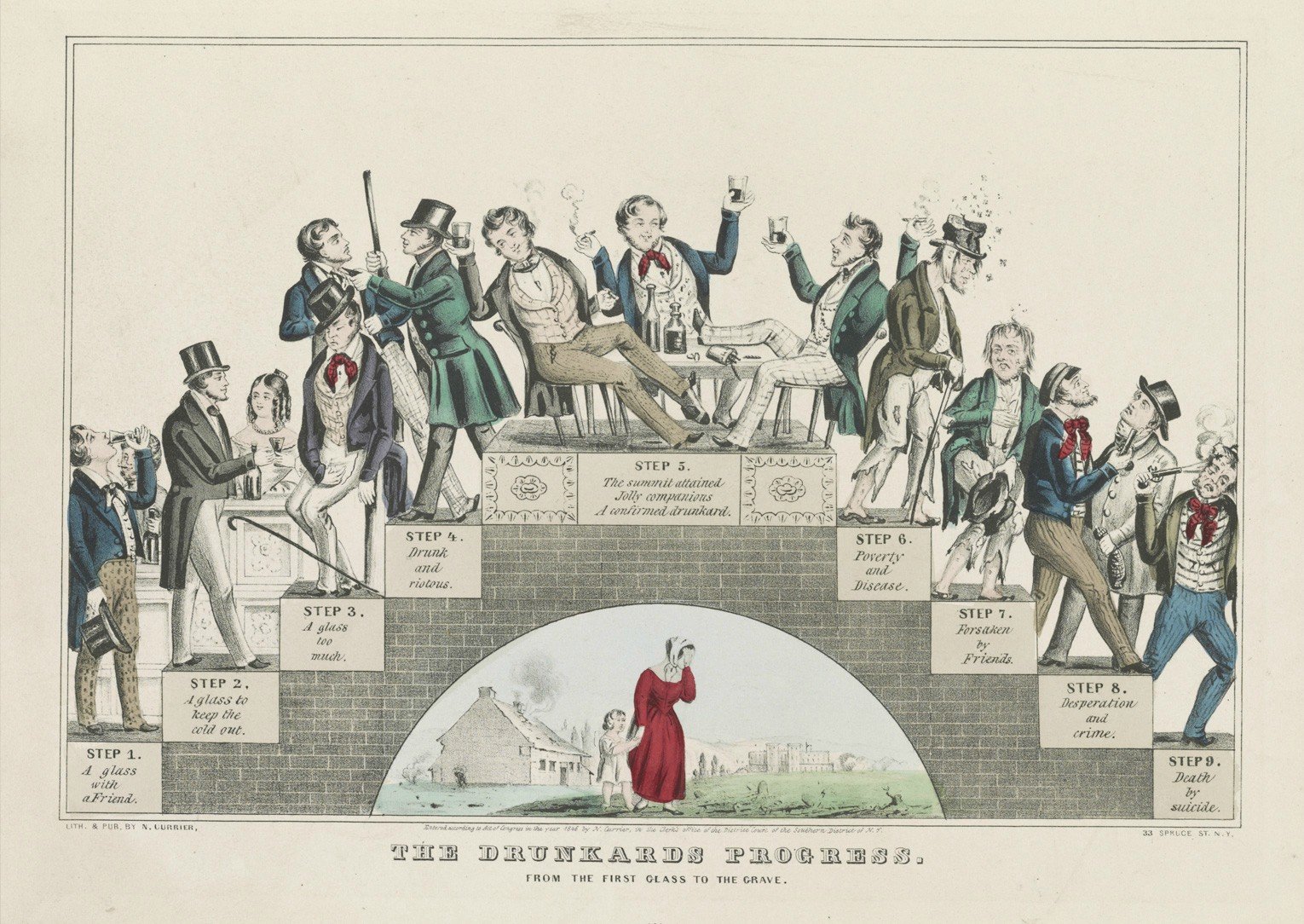
“The Drunkards Progress: From the First Glass to the Grave.”
Step 1: A glass with a Friend:
A respectable man in a suit actively downing a glass of alcohol, behind him, a man looking off to the side holds a bottle in his hand while taking a drag. Currier and Ives typically portray men of further use, specifically those who coerce others to drink, as also smoking. This is seen in the print “The Progress of Intemperance.”
Step 2: A glass to keep the cold out:
A man in truly formal attire gazes into the eyes of a woman wearing a white dress, handing him a drink, their hands about to touch. She holds a bottle in her other hand, returning his gaze with interest. In current times, this is a provocative image; in the 1940’s, women in society were not allowed to drink in public unless on very special occasions, such as a wedding. This displayed the joys of having a drink to celebrate, as he is still on a path upwards, though one that leads to his final demise.
Step 3: A glass too much:
Here we see a lone, well-dressed man with a loss of comportment. His eyes closed, hat tilted as though it might fall off. His body limp, and knees weak, as he attempts to rest against some sort of stabilizing wall.
Step 4: Drunk and Riotous:
Here, in a bright green overcoat and force in his stride, we see a man, our soon-to-be-deemed Drunkard, holding up a long and seemingly dense rod, gesturing in anger as he towers over a man, seemingly passive, holding him by his tie as his body is entirely falling off the step.
Currier and Ives, 1846, Hand Colored Lithograph, 32.4 x 42 cm, National Library of Congress
Step 7: Forsaken by Friends:
Crouched as if he had to pee, his clothes only further tattered. He is depicted with one hand holding his chest, the other holding his tattered top hat. His greasy hair displayed as he looks toward the viewer, as no one else dared to engage with him.
Step 8: Desperation and Crime:
At first glance, his appearance looks far more kept and healthy. He had a new hat and clothes, his hair grown, with a strong positioning of body and a more prideful face. This is when the viewer sees that he is simultaneously choking out a man and pointing a gun at his neck. The man has a bag in his hand, presumably of money. Made painfully obvious that his clothes were stolen.
Step 9: Death by Suicide:
This final and devastating scene is one that they make seem deserved. Their depiction of his violence, desperation, and disease is meant to shame the deemed “drunkard” to a point where he does not die of health effects but his own hatred for himself and his actions. A violent, unnecessary end that none are deserved of.
Middle Scene: A Mother and Young Child:
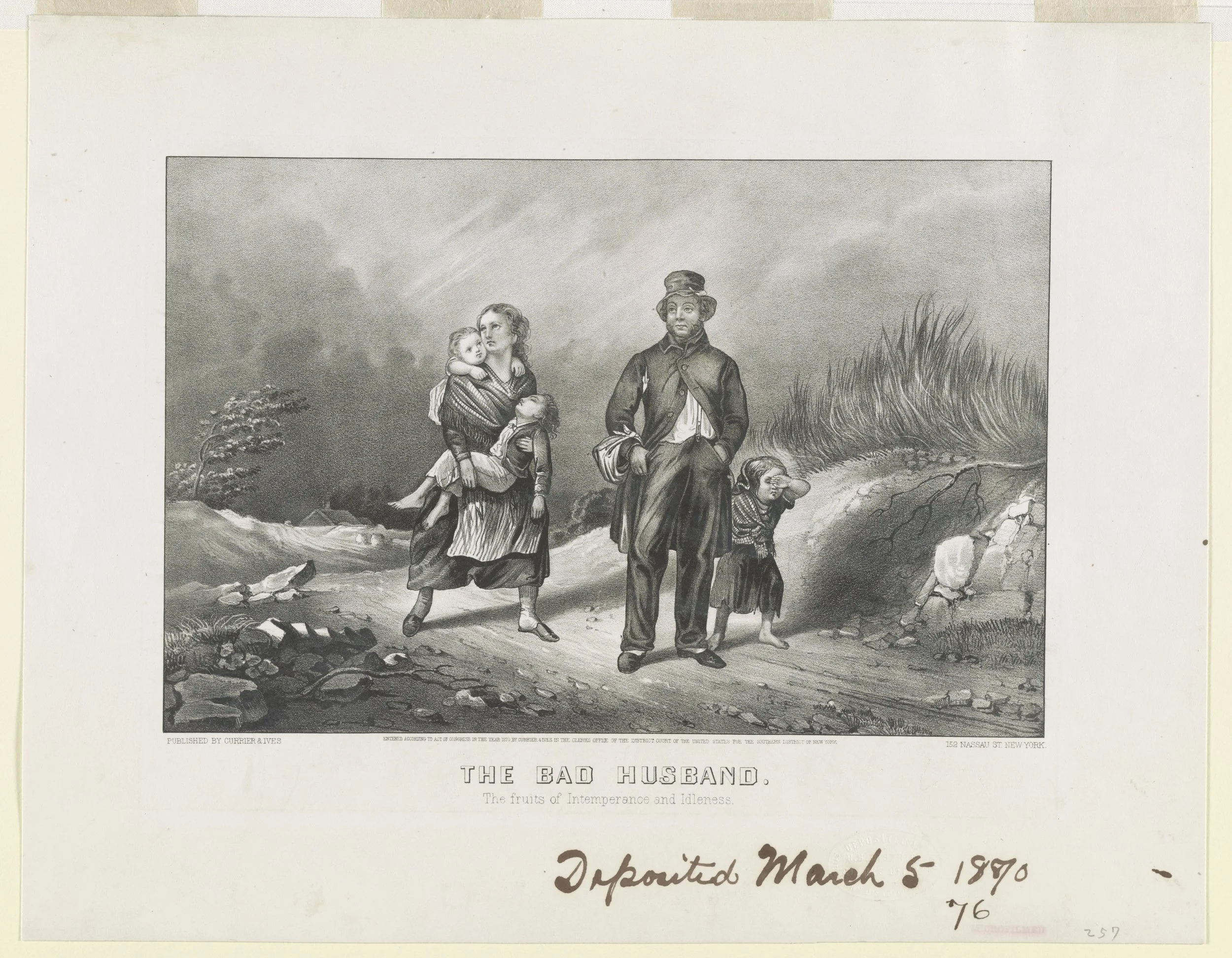
Below the bridge that depicts the path of the drunkard is a scene of what the viewer may deem the “drunkard's” wife and child. It shows a woman in the foreground in a bright, eye-catching red dress, her hand covering her face in sadness and possible shame. Her child looks up to her for guidance as they walk in an open field with distant buildings, possibly including their home, left behind them. A similar scene of a family having to leave their home is shown in “A Bad Husband: The Fruits of Intemperance and Idleness."
Step 5: The Summit Attained Jolly Companions, a Confirmed Drunkard.
Our deemed Drunkard has now reached the highest step of this bridged tear system; the only path forward is down. With sobriety on the left and death to the right, we see a scene of three men sitting amusedly at a table, our main figure is pictured on the right-most ledge of the stair, his chair millimeters from ruin. Half his body leans off the edge, a drink in one hand and a cigarette in the other. Inebriated to a greater capacity than before, his friends all the same way. Each of which teeters back on their chair with complete instability, their feet raised on the table that holds yet more bottles. The subject of the drunkard has kicked a cup over, its contents falling to the ground, he himself utterly unfazed. With the loss of their top hats; their jolly faces and glossy eyes are made clear.
Step 6: Poverty and Disease:
The diseased, the disabled, and the poor. Common visual characteristics of one's “degeneration.” Walking with the need of support from a cane, we see the subject dazefully walk towards the ledge. His top hat bent and torn, he is pictured with a bandage around his ear, and dust in the air around him. His clothes are torn, his pant legs disintegrating, his feet barren and muddy.
Currier and Ives, Public domain, via Wikimedia Commons
“The Drunkards Progress: From the First Glass to the Grave.”
Currier and Ives, 1846, Hand Colored Lithograph, 32.4 x 42 cm, National Library of Congress
Currier and Ives made prints that were accessible to the American audience.6 They also made prints to appease, cater to, and rile up their patrons. They did not endorse any politicians, and often switched their narrative to produce what sold the most. This is made evident by their Civil War prints and depictions of Black people. Catering to a white audience, first union supporting, then later nostalgic for the time of slavery.7 They loved depicting tragedy, but they never depicted sex.8 This would make sense as sex, though contemporarily sells, may have been a truly scandalous and far too volatile of a subject to depict for a mass audience in the 1950’s. Currier and Ives instead stuck with slavery, fires, politics, and addiction. The scholar Russell Crouse states, “A certain Mr. Volstand is blamed by most Americans for what we call, for want of a better name, prohibition. Mr. Currier and Mr. Ives had more, perhaps, to do with it, for their illustrations of the fate of the drunkard helped frighten a generation into the temperance movement.” Currier and Ives mass-produced prints permeated the minds of 19th-Century Americans. One of their most famous prints, which had a long and lasting impact, was:
Notes :
Russel Crouse, Mr. Currier and Mr. Ives: A Note on Their Lives and Times (Garden City, NY: Garden City Publishing Co., 1930), 23 and 24.
Ibid., 4.
Bryan F. Le Beau, “Art in the Parlor: Consumer Culture and Currier and Ives,” The Journal of American Culture 30, no. 1 (2007): 18–37.
Crouse, Mr. Currier and Mr. Ives, 9.
Ibid., 8 and 9.
Bryan F. Le Beau, “Art in the Parlor: Consumer Culture and Currier and Ives,”
Crouse, Mr. Currier and Mr. Ives, 9.
Melissa Duffes, “Revisiting America: The Prints of Currier & Ives,” Omaha, Nebraska: Joslyn Art Museum. 2020. 139.
Crouse, Mr. Currier and Mr. Ives, 7.
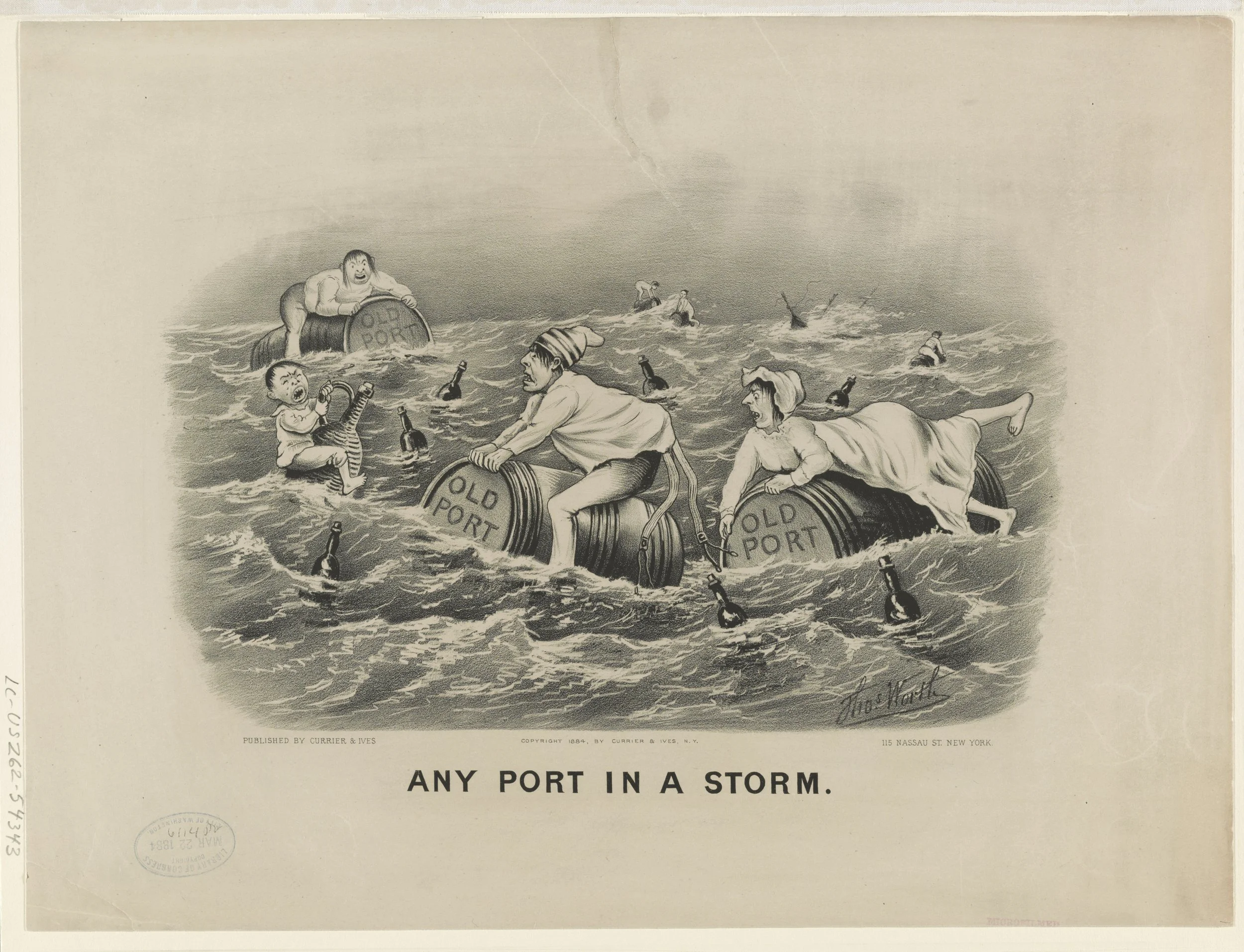
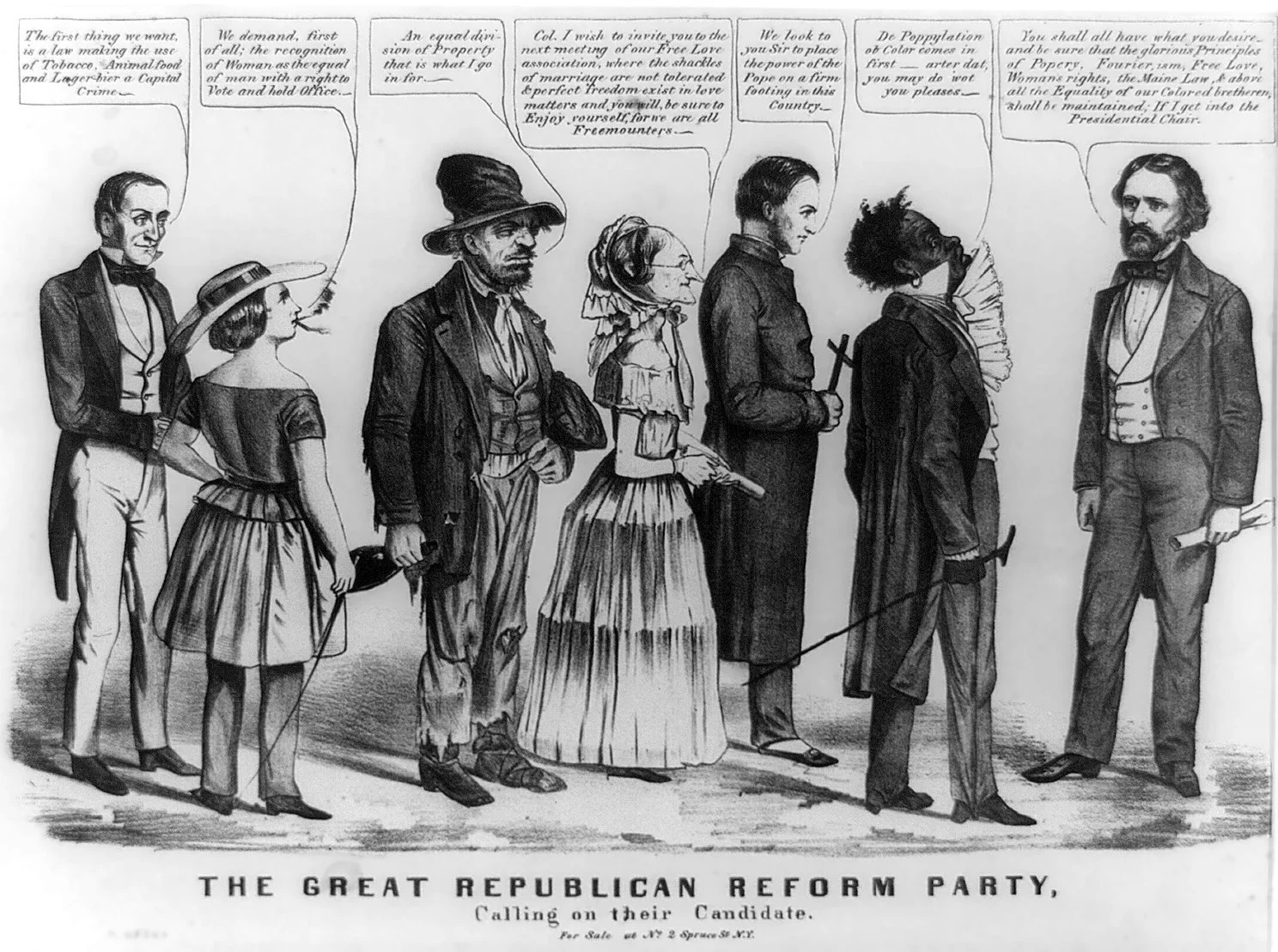
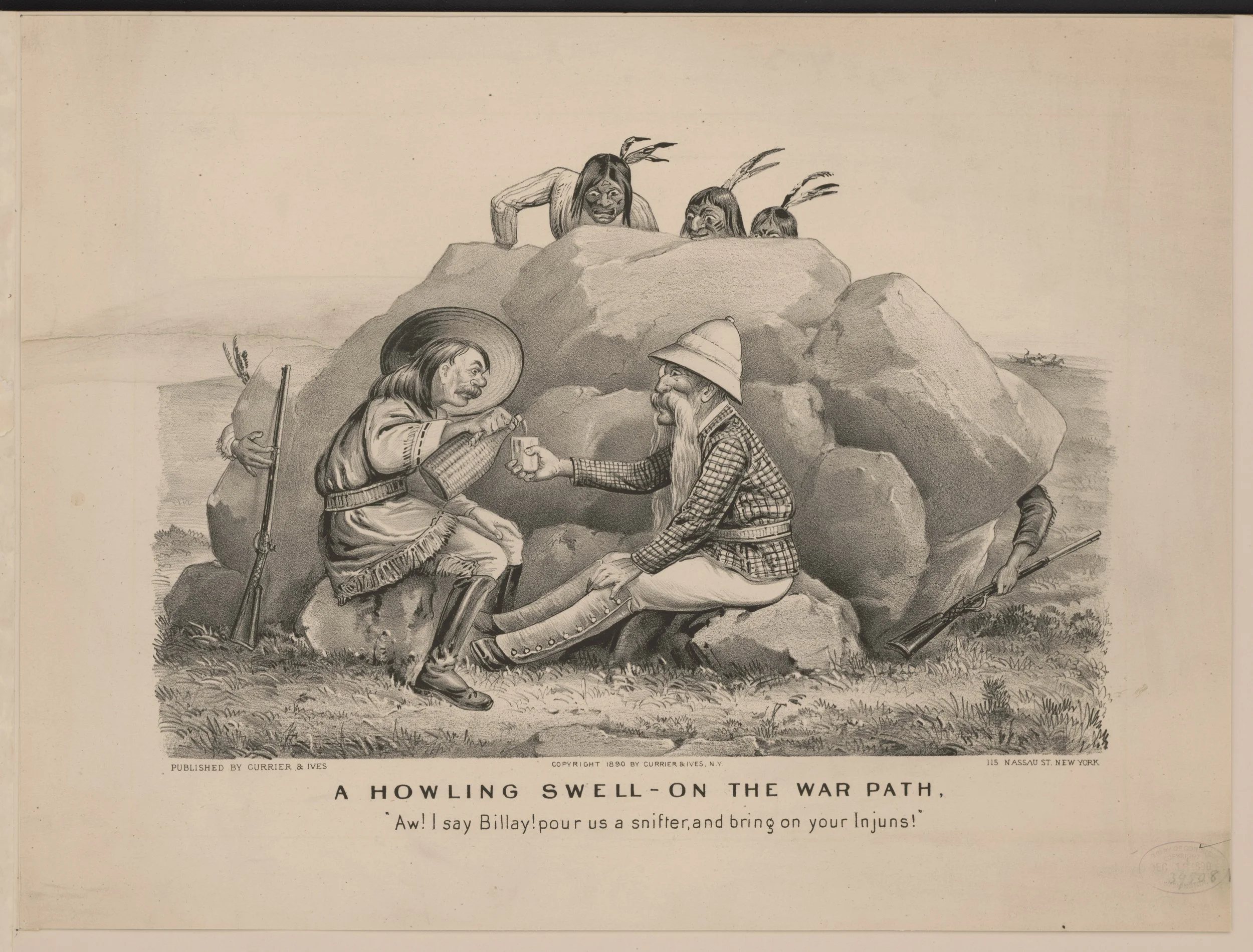
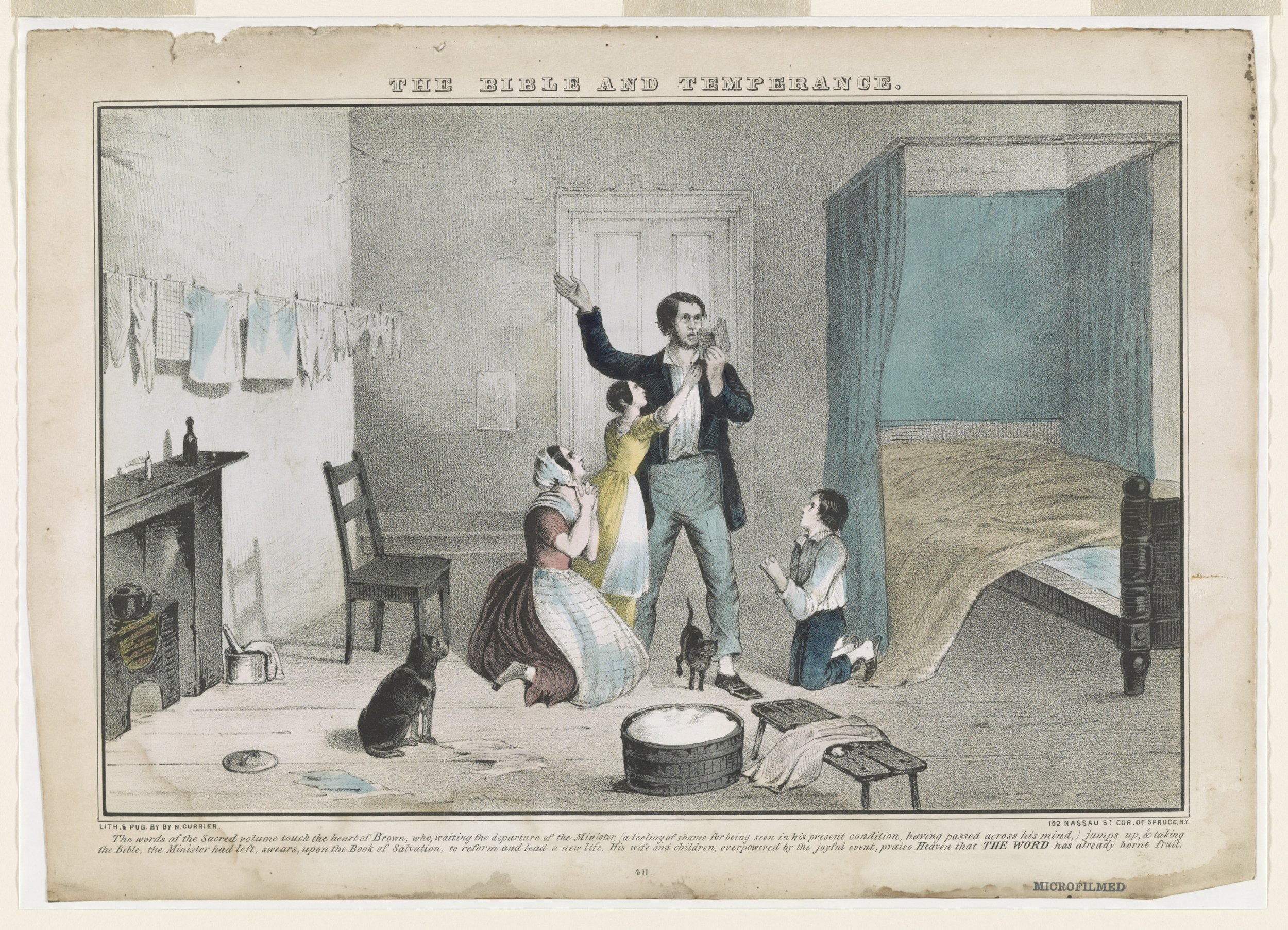
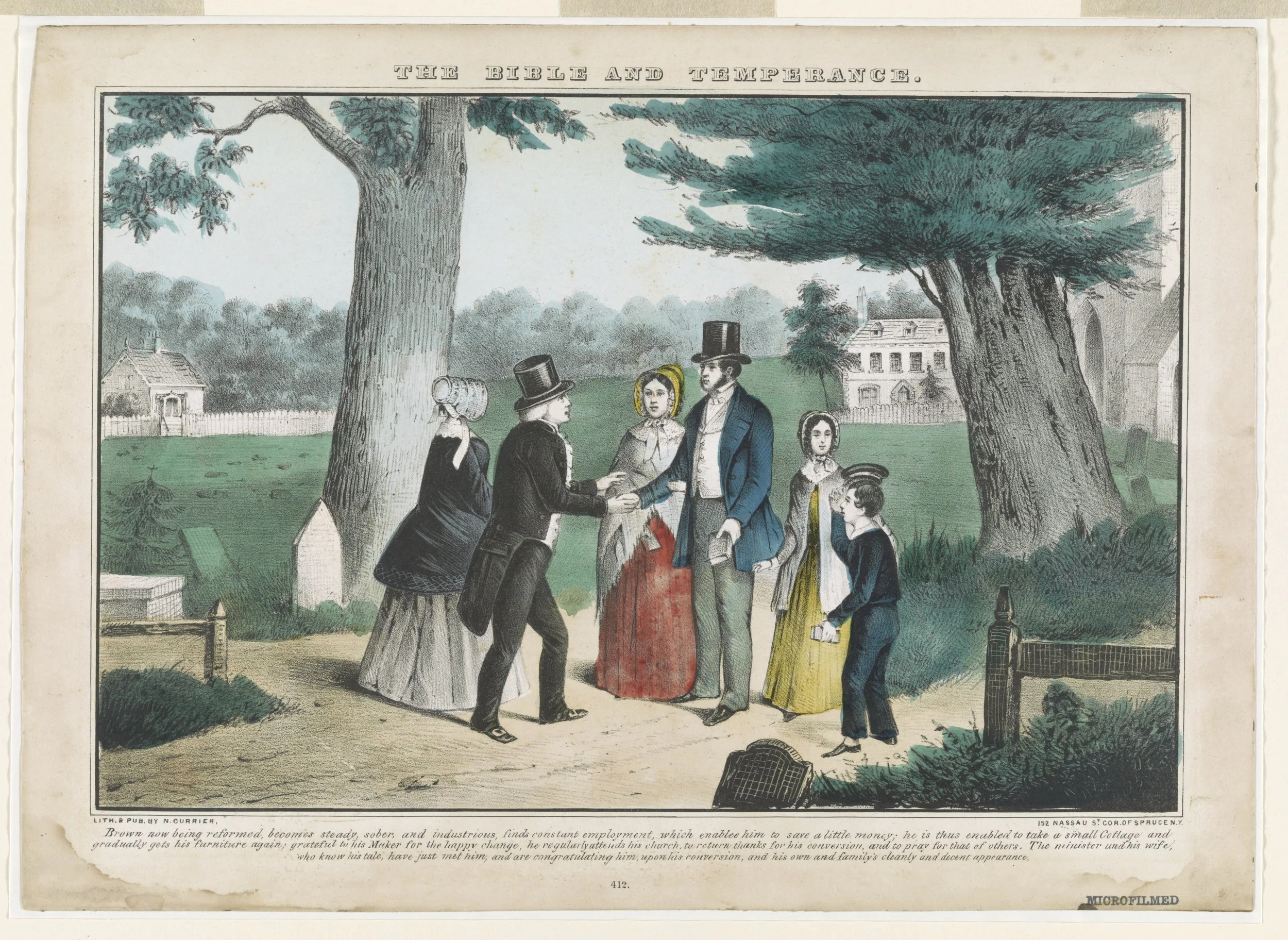
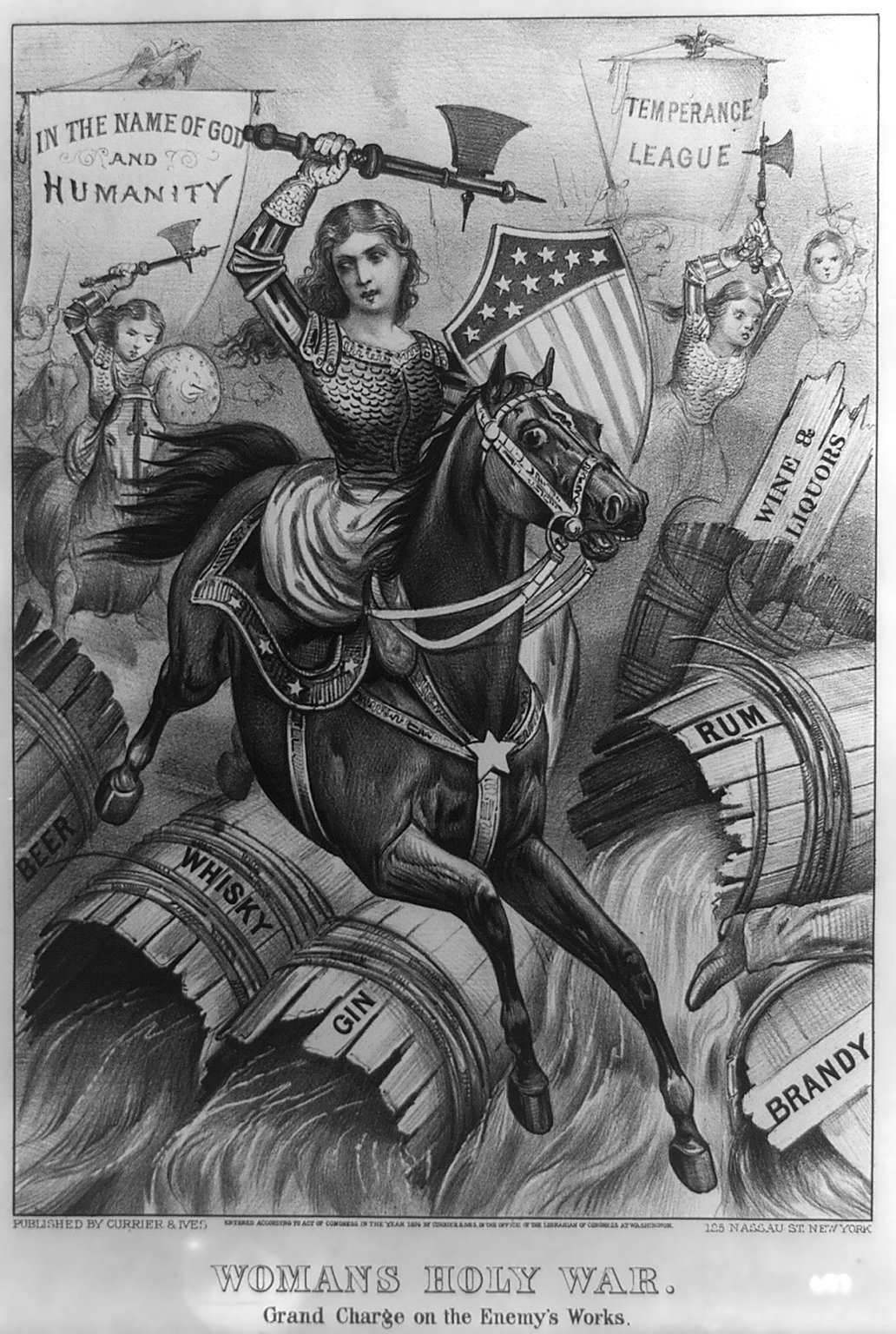
“The Drunkard's Progress” was not Currier and Ives first or last image of addiction or inebriation. They had countless prints depicting addiction.
All Atributed to: Currier and Ives, Public domain, via Wikimedia Commons


Bibliography:
Le Beau, Bryan F. “Art in the Parlor: Consumer Culture and Currier and Ives.” The Journal of American Culture 30, no. 1 (February 23, 2007): 18–37. https://doi.org/10.1111/j.1542-734x.2007.00462.x.
Met Museum. “Currier & Ives - a Howling Swell -- on the War Path: ‘Aw! I Say Billay! Pour Us a Snifter, and Bring on Your Injuns!’ - the Metropolitan Museum of Art.” The Metropolitan Museum of Art, 2026. https://www.metmuseum.org/art/collection/search/910682.
Minick, Jeff. “The Temperance Movement and Its Influence on America.” The Epoch Times, July 31, 2023. https://www.theepochtimes.com/bright/the-temperance-movement-and-its-influence-on-america-5428287.
Reilly, Bernard, and Gale Research Company. 1983. “Currier & Ives: A Catalogue Raisonne / Compiled by Gale Research Company; with an Introduction by Bernard F. Reilly.” Detroit: Gale Research.
Duffes, Melissa. “Revisiting America: The Prints of Currier & Ives” Omaha, Nebraska: Joslyn Art Museum. 2020.
Crouse, Russel. Mr. Currier and Mr. Ives: A Note on Their Lives and Times. Garden City, NY: Garden City Publishing Co., 1930.
The American Yawp. “ Religion and Reform .” Americanyawp.com, June 7, 2013. https://www.americanyawp.com/text/10-religion-and-reform/1000/.
Winterthur.org. “Making Currier & Ives Prints – Lasting Impressions,” 2016. https://lastingimpressions.winterthur.org/creating-currier-ives-prints/.