We want your insight!
We are always looking for new leads, research, and input! We would love for you to email us any information you have at share@inebriationinart.com
We find it necessary to learn from and collaborate with people in and around the addiction and substance-using community.Specifically, regarding how to discuss these harmful visual narratives placed upon the inebriated figure.
Art history research needs to be conducted in collaboration with affected communities of visual hate and exclusion. We would love your help with this. If you are interested and have the capacity to share your experience and expertiese we would love to hear it!
All submissions will not be shared publicly or without concent of the author and each authors annonymity will be assumed and kept unless the author would like to be named. At any point the author can re-email and revoke anonnymity if they wish for named public credit.
Lets grow this archive:
At present, the platform focuses on 19th-century works of art from the United States.
Our goal is to include research from a wide array of other countries and time periods. This will be done in increments to allow in-depth exploration of each period and location at a time. We would additionally benefit from complementary research or evidence-supported suggestions on periods and pieces we should focus on next.
This website aims to help deconstruct the perpetuation of stigmatizing visual narratives by providing a platform that examines the historical representation of the inebriated body. It is a space designed to question and foster discussion about the contexts in which the inebriated body has been presented through public academic discourse.
Contact us:
We want your knowledge, opinions, and critiques!
If you are not comfortable sharing your email, this is a way you can still give your valued input while staying anonymous.
Censorship and Community Guidelines:
Every decision we make is shaped by a goal to support and uplift our community. We wish to stimulate insightful and intersectional conversation about the visual depiction of inebriation from a harm reduction lens.
This is a field and space where we work with very harmful images, texts, and ideologies. We do not condone nor support writing that perpetuate these harmful narratives, but acknowledge, assess, and contextualize these narratives to better understand our society.
We turn to scholars like Odomosu, Kienle, and Antelman to decide weather submited research should be published, sections censored, or the art itself not digitized and retranscribed to the public.
We support Harm Reduction Based Practices of thinking about people with addictions, and who use alcohol and drugs.
https://harmreduction.org/about-us/principles-of-harm-reduction/
What you can and can’t submit:
-
We would love to see any art you have come across that is within this topic. Please give as much information as possible to accompany it.
We would love to hear and/or publish your found work and visual analysis along side if we find it correlates with these studies.
-
We love more information, please hand it over. We would love your input on the sources you are submitting.
Intersectional conversations are welcome and suggested.
Research development allows us to create a narrative map of the different societal impications and impacts that connect with the visual art we work with.
-
Any language that perpetuates derogatory narratives and uses hate speech, bias-motivated language, or discriminatory intimidation tactics will not be published.
It is cercumstantialy allowed if you are using derogatory terms in a practice of personal reclemation or for educational perpouses.
-
We want to hear your opinions and see photos of art you had permission to take and submit to us.
Scholars:
Antelman, Kristin. “Content Warnings and Censorship.” Portal: Libraries & the Academy 23, no. 3 (July 1, 2023): 461–84. https://doi.org/10.1353/pla.2023.a901564.
Kienle, Miriam. “Digital Art History ‘beyond the Digitized Slide Library’: An Interview with Johanna Drucker and Miriam Posner.” Purdue e-Pubs, 2017. https://docs.lib.purdue.edu/artlas/vol6/iss3/9/.
Odumosu, Temi. “The Crying Child.” Current Anthropology 61, no. S22 (October 1, 2020): S289–302. https://doi.org/10.1086/710062.
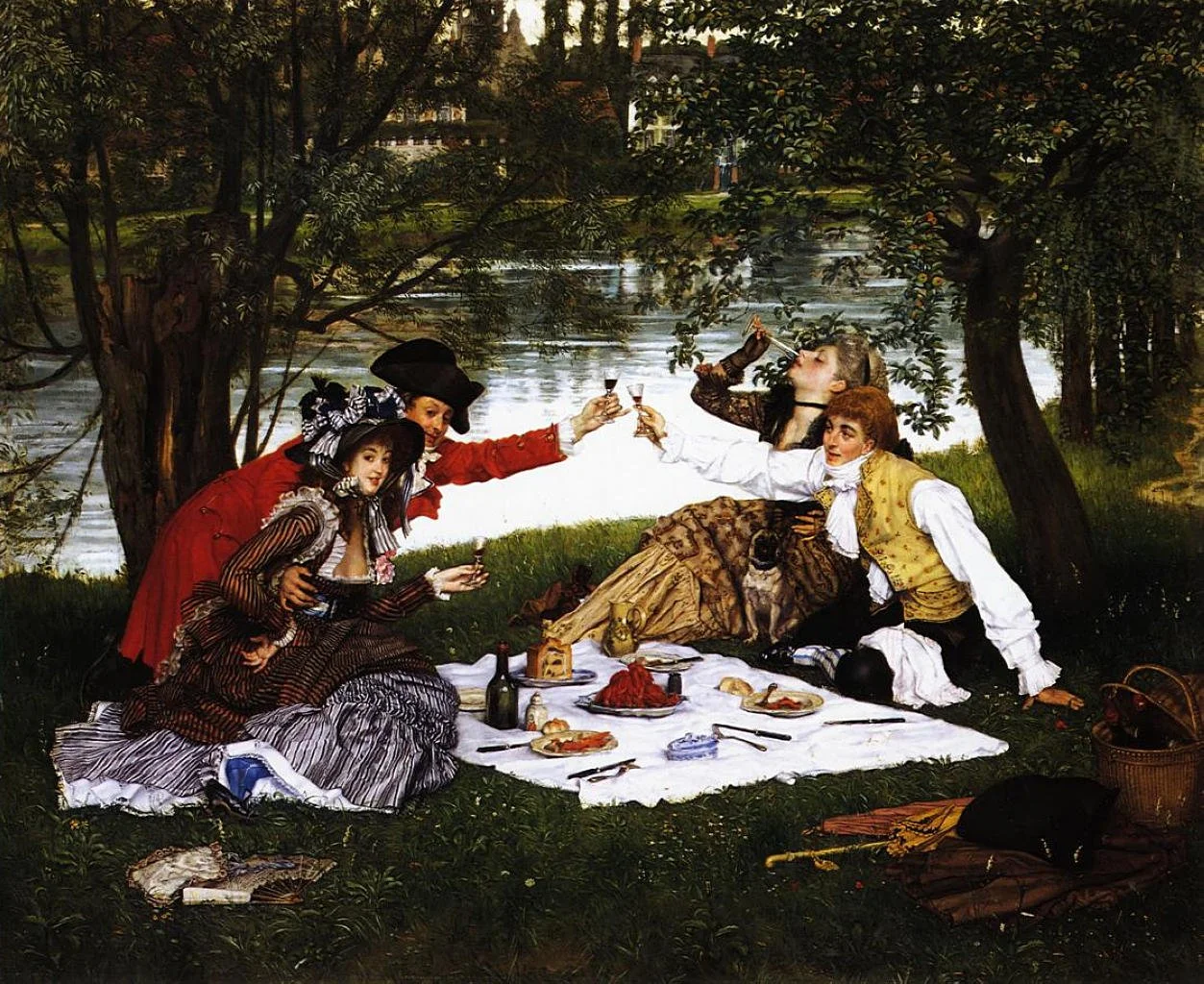
James Tissot, Public domain, via Wikimedia Commons